

YOU MAY ALSO LIKE


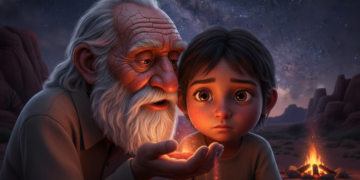
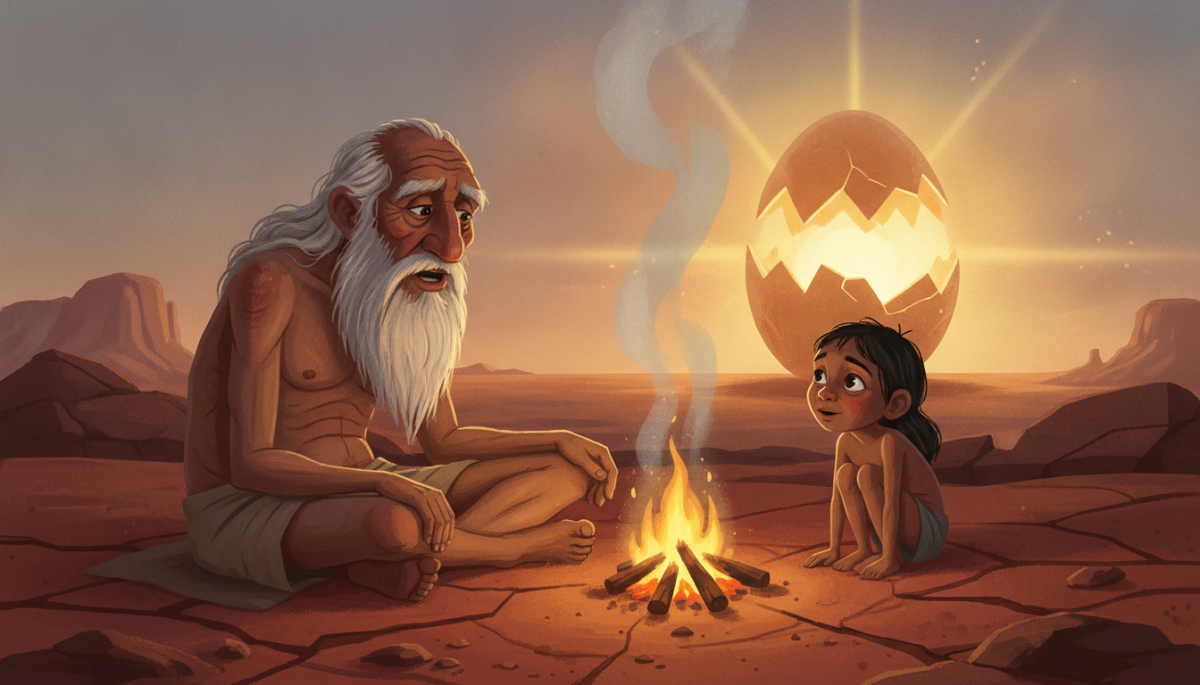
Come closer, little one. Lean in until the heat of these dying coals grazes your dry cheeks. Do not look back at the creeping shadows beyond our circle; they are old, but they are hollow. Listen instead to the rattle in my chest, to the weight of a tongue that carries the very last memory of how we came to be. I speak to you in the language of the clay, the language our people spoke before the sky had a face. When my breath fails, this story must live in your blood, or we will vanish into the dark just as these embers turn to gray ash.
Close your eyes and try to feel what it was like in the beginning. There was no yellow warmth, no blue dome above. The earth was cold, draped in a thick, wet shroud of ancient morning mist that never lifted. We did not walk upright then. How could we? To stand was to strike your head against the heavy, sightless blackness. Instead, our ancestors crawled through the primeval mud, their fingers sinking deep into the wet, cold earth, feeling for the roots of things they could not see. Every breath was a sharp, damp shock to the lungs, tasting of wet stone and old decay.
The Age of the Blind Crawl
In those days, we were like the blind grubs beneath the bark. We knew the world only by its textures—the rough, biting bark of the ancient paperbarks, the cold slime of the riverbeds, and the sharp, jagged edges of cracked clay when the rains briefly ceased. We huddled together for warmth, shivering skin against shivering skin, unable to see the faces of our own mothers or the hands of our own children. We knew each other only by the sound of our breathing and the wet, heavy smell of the mud that coated our limbs.
But we were not alone in the dark. The great spirits of the dreaming walked the earth, giant and terrible. Among them was the giant Emu, a creature of immense size who claimed the dark plains, and the Brolga, the elegant dancer of the swamps. They lived in a state of constant, restless friction, their heavy footsteps shaking the mud beneath our bellies. The darkness made them bitter, and they fought over the few patches of dry ground where the reeds grew thickest.
The Clash in the Great Dark
One night—though night and day were all the same then—a great dispute broke out between the Brolga and the giant Emu. The ground trembled. We pressed our faces into the wet dirt, covering our ears as their angry cries tore through the mist. The Brolga, furious and blind with rage, ran toward the Emu’s nest. She reached into the darkness, her sharp beak finding a massive, heavy sphere—a giant emu egg, smooth yet textured with tiny, cold dimples.
With a desperate, sweeping motion of her neck, the Brolga hurled the giant egg up into the dark sky. She did not know what lay above, only that she wanted to rid the earth of the Emu’s future. The egg soared through the damp morning mist, cutting a path through the heavy air, higher than any bird had ever flown, up into the high canopy of the sky where the sky-people had piled their dry firewood.
The Shattering of the Sky
Then came the moment that changed the clay forever. The giant egg struck the pile of dry wood with a thunderous crack that shattered the silence of the world. The fragile shell burst open, and the rich, golden yolk spilled out across the dry timber. In an instant, the friction of the impact ignited the wood. A spark caught, a flame licked the dark, and then, with a roaring gasp, the first fire exploded into existence.
It was a sudden, blinding shock. Down on the wet earth, our ancestors screamed and pressed their eyes into the mud, terrified by the hot, searing light that pierced their closed eyelids. For the first time, a strange warmth brushed against their cold, damp skin. Slowly, trembling, one old man lifted his head from the dirt. He blinked, his eyes stinging, and saw his own hand. He saw the wet, red clay clinging to his knuckles. He looked up and saw the sky-fire burning bright and golden, casting long, dancing shadows across the earth.
Walking Upright in the Light
The light chased the ancient mist away, revealing the vast, beautiful expanse of the red plains, the winding rivers, and the green canopy of the trees. The ancestors stood up. They straightened their spines, peeling their bellies from the primeval mud, and looked upon each other’s faces for the very first time. They wept to see the beauty of their children and the strength of their elders. They could see where to walk, where to hunt, and where to build their shelters. They were finally free to roam.
The sky-people saw how much the light helped the people below, and so they resolved to keep the fire burning. Every night, they let the fire die down to a heap of glowing embers, which we call the stars, and every morning, they pile new wood to ignite the giant egg’s yolk once more, giving us the sun.
Remember this, child, as the cold of the night settles into our bones. The fire in the sky was born of a struggle, but it gave us our sight and our freedom. Never forget the wet mud we crawled in, and always look up to the sun with the reverence of those who once lived in the endless dark.
Frequently Asked Questions
How did the ancestors of the Karuwali people navigate the world before the first fire?
Before the first fire, the ancestors lived in a state called the Age of the Blind Crawl. They navigated the cold, dark world entirely by touch and texture. They crawled through primeval mud, feeling the rough bark of paperbarks and cold riverbeds, and recognized one another only by the sound of their breathing and the smell of the mud on their skin.
What triggered the creation of the sun according to this Karuwali legend?
The sun was created during a violent dispute between the Brolga and the giant Emu. In her rage, the Brolga threw a massive emu egg high into the dark sky. The egg struck a pile of dry wood gathered by the sky-people, shattering and spilling its golden yolk, which ignited the wood and created the first fire.
Why were the ancestors terrified when the sky-fire was first ignited?
The ancestors had lived their entire lives in absolute darkness and cold, wet mist. The sudden, explosive ignition of the first fire was a blinding shock that pierced their closed eyelids. Terrified by the intense, unfamiliar light and sudden warmth, they initially screamed and pressed their faces deeper into the mud.
What is the deeper significance of the storyteller sharing this tale with the listener?
The storyteller is passing down the very last memory of their people's origin before their own breath fails. They emphasize that this story must live in the listener's blood; otherwise, the Karuwali people and their ancient history will vanish into the darkness, just like the dying embers of their fire.
Discover more from Nenext
Subscribe to get the latest posts sent to your email.