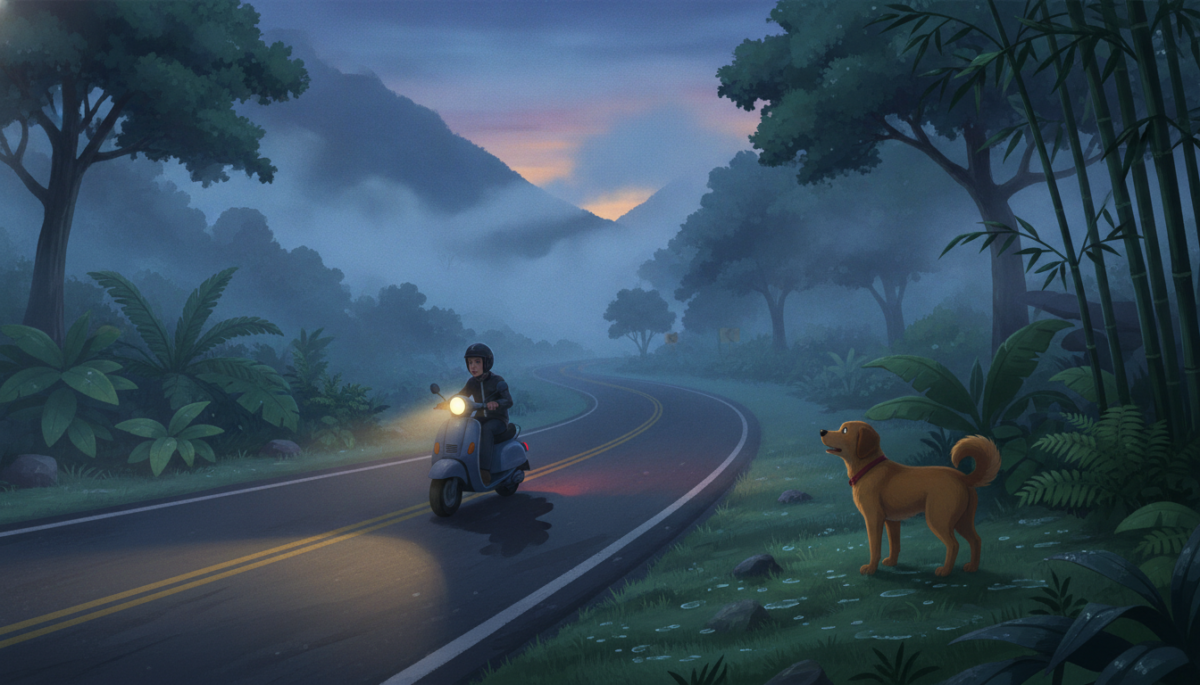

Imagine cruising down a scenic mountain pass in Taiwan, enjoying the fresh breeze, when suddenly a shadow leaps from the tall grass. Your heart jumps into your throat as a barking dog darts directly toward your spinning tires. This sudden encounter with stray dogs chasing vehicles is a thrilling yet terrifying reality for many travelers and locals alike. While it feels like an unprovoked attack, this behavior is actually a complex mix of ancient instincts, fear, and territorial defense. Understanding why these animals chase us is the first step toward ensuring safety for both humans and our four-legged neighbors on this beautiful island.
Understanding the Canine Instinct Behind the Chase
To solve this roadside safety puzzle, we must first look at the world through a canine’s eyes. The thrill of the chase is deeply embedded in a dog’s DNA, inherited directly from their wild ancestors. When a fast-moving object like a motorcycle or bicycle zips past, it instantly triggers their predatory drive. The spinning wheels and high-pitched engine hums act as a powerful catalyst, urging them to run and catch the escaping target.
In addition to hunting instincts, territorial defense plays a massive role in these roadside confrontations. Stray dogs often claim specific streets, alleyways, or mountain bends as their personal domains. To a protective pack member, a speeding scooter isn’t just a vehicle; it is an invading threat that must be driven away immediately. Once the vehicle passes and the threat retreats, the dog feels a sense of accomplishment, which unfortunately reinforces the chasing behavior for the next time.
The Emotional Motivations: Fear, Anxiety, and Boredom
Beyond raw instinct, many free-roaming dogs react out of deep-seated fear and anxiety. Many of Taiwan’s stray animals have experienced abandonment, hunger, or negative interactions with humans in the past. Consequently, they may view fast-moving machinery as dangerous entities that might harm them. Chasing and barking become defensive mechanisms—a way to control their environment and keep perceived dangers at a safe distance.
Sometimes, however, the motivation behind this behavior is far simpler: sheer boredom. Life on the streets can be incredibly monotonous for an intelligent, active animal. A passing cyclist or jogger represents a sudden burst of excitement and a rare opportunity to expend pent-up energy. Recognizing whether a dog is acting out of aggression, fear, or playfulness is crucial for determining how to react safely.
How to Handle a Roadside Dog Encounter Safely
When you find yourself in the crosshairs of a charging dog, panic is your worst enemy. Screaming or suddenly accelerating can escalate the situation, as dogs interpret these actions as either prey trying to escape or an escalation of conflict. Instead, the smartest move is to remain completely calm and maintain a steady, predictable pace.
If you are riding a motorcycle or bicycle, gently ease off the throttle or slow down your pedaling. Abrupt movements can startle the dog into biting, whereas slowing down often diffuses their excitement. In many cases, once the vehicle loses its high-speed momentum, the dog will lose interest and wander back to the roadside.
If you are on foot, never turn your back and run, which almost guarantees a chase. Instead, turn your body sideways to present a non-threatening silhouette and avoid direct eye contact, which dogs perceive as a direct challenge. Keep your hands relaxed at your sides and slowly back away, allowing the dog to see that you are neither a threat nor a plaything.
Long-Term Solutions for Harmonious Coexistence
While immediate safety tactics protect travelers, long-term solutions are required to address the root of the stray dog crisis. Implementing comprehensive TNR (Trap-Neuter-Return) programs is highly effective in managing and gradually reducing the free-roaming dog population. Sterilized dogs are generally less aggressive, less territorial, and far less likely to engage in dangerous chasing behaviors.
Furthermore, fostering responsible pet ownership and enforcing strict anti-abandonment laws are critical to stopping the cycle at its source. Supporting local shelters and promoting adoption over buying can help transition these vulnerable animals from dangerous roadsides into loving homes. When we invest in community-based animal welfare, we create safer streets for everyone.
Ultimately, the roads we travel do not belong to us alone; they are shared pathways where human civilization meets the natural world. By learning to read the subtle language of our canine neighbors, we can replace fear with understanding and conflict with peaceful coexistence. The next time you see a shadow waiting by the mountain bend, remember that patience and respect are the ultimate tools for a safe journey home.
Frequently Asked Questions
Why does slowing down my vehicle actually stop a stray dog from chasing me?
Slowing down works because fast-moving objects trigger a dog's predatory drive. The spinning wheels and high speed make you look like fleeing prey. When you decelerate, you disrupt this instinctual trigger, making the chase lose its excitement and causing the dog to quickly lose interest.
How does a dog's territorial behavior make roadside chases happen repeatedly in the same spot?
Stray dogs claim specific mountain bends or streets as their territory. When you speed past, they chase you to defend their space. Because you naturally keep moving and leave, the dog believes its chase successfully scared you away, which reinforces this behavior for future travelers.
Why is avoiding direct eye contact crucial when facing an aggressive stray dog on foot?
In canine body language, direct eye contact is interpreted as a confrontation or a direct challenge. To de-escalate the tension, you should turn your body sideways to appear smaller and look away slightly. This signals to the dog that you have no interest in fighting.
Can a dog chasing my scooter simply be bored rather than angry or aggressive?
Yes, absolutely. Life on the streets can be highly monotonous for active, intelligent animals. A fast-moving scooter or bicycle represents a sudden burst of excitement. For some stray dogs, chasing you is merely a way to relieve boredom and expend pent-up energy.
How do Trap-Neuter-Return (TNR) programs help reduce these dangerous roadside encounters?
TNR programs manage and gradually reduce the stray population over time. Furthermore, sterilized dogs undergo hormonal changes that generally make them less territorial and aggressive, directly lowering the chances of them launching defensive chases against passing travelers.
Discover more from Nenext
Subscribe to get the latest posts sent to your email.