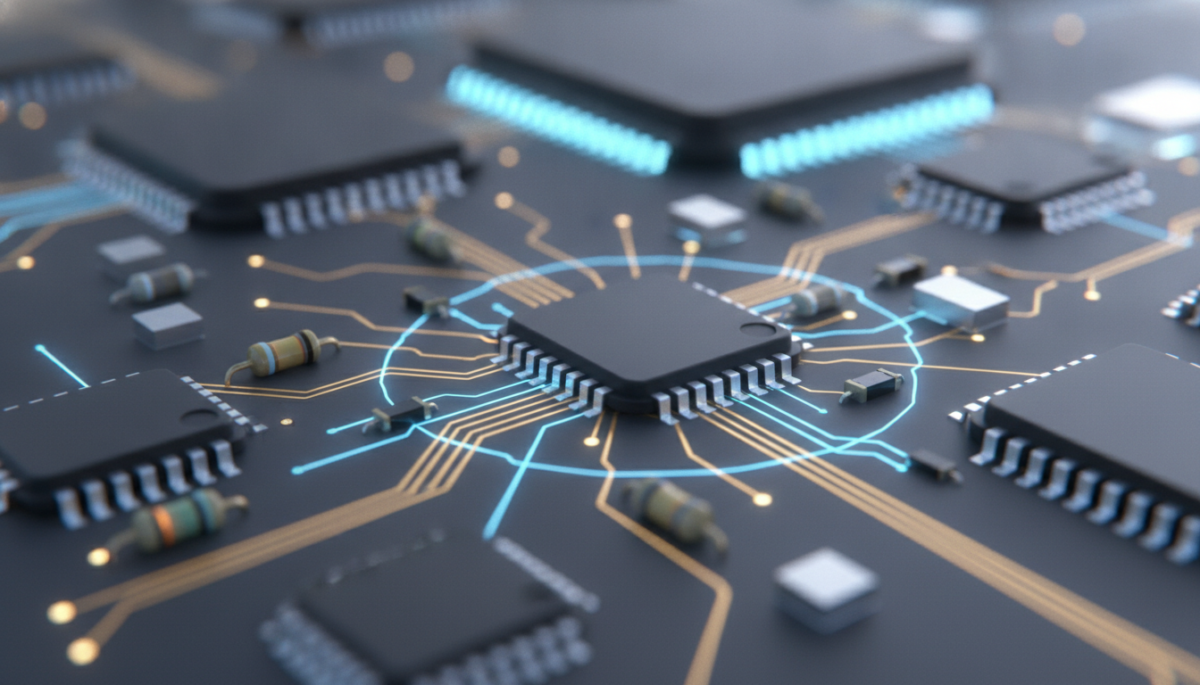

While the world stands in awe of massive artificial intelligence models and ultra-powerful GPUs, a silent revolution is happening beneath the surface. Behind every groundbreaking AI algorithm lies a complex web of physical hardware that must operate with absolute precision. Within this hardware, passive components in the AI era have emerged as the unsung heroes keeping the digital world from crashing down. Without these tiny elements, even the most advanced semiconductor chips would instantly fail due to power fluctuations and signal noise.
To understand why these components are so critical, we must first look at what they do. Unlike active components like CPUs or GPUs that actively process data and amplify signals, passive components—namely resistors, capacitors, and inductors—do not generate energy. Instead, they act as the traffic controllers of the electrical world, regulating current, stabilizing voltage, filtering out electromagnetic interference, and storing energy. They are the quiet guardians of electronic stability, ensuring that delicate silicon chips receive clean, uninterrupted power.
The Fundamental Trio: Resistors, Capacitors, and Inductors
Every electronic circuit, from a simple smart light bulb to a multi-million dollar AI server, relies on these three fundamental building blocks. Resistors are designed to limit electrical current and divide voltage, preventing sensitive parts of the circuit from being overloaded. Capacitors store electrical energy temporarily, filtering out high-frequency noise and smoothing out voltage ripples to ensure steady power delivery. Meanwhile, inductors store energy in a magnetic field, blocking alternating current (AC) while letting direct current (DC) pass, which is crucial for impedance matching and noise suppression.
As industries transition toward high-frequency applications like 5G, electric vehicles (EVs), and advanced driver-assistance systems (ADAS), the demand for high-performance passive components has skyrocketed. These sectors require components that can withstand extreme temperatures, high voltages, and rapid power shifts. Consequently, what used to be treated as cheap commodity parts have now become highly engineered, high-value assets vital to modern industrial progress.
Why the AI Boom Demands Next-Generation Passive Components
The sudden rise of generative AI and high-performance computing (HPC) has pushed hardware design to its absolute physical limits. Modern AI accelerators and GPUs consume massive amounts of power, often demanding hundreds of amperes of current in microseconds. This rapid switching of power states creates massive electrical noise and transient voltage drops that can easily corrupt data or damage expensive processors. To prevent this, advanced AI servers require highly specialized passive components capable of handling extreme electrical stress.
Multi-layer ceramic capacitors (MLCCs) are particularly critical in this environment, acting as local energy reservoirs right next to the processor. By placing high-capacitance, low-equivalent series resistance (ESR) MLCCs close to the chip, engineers can decouple the power supply and prevent voltage drops during sudden processing spikes. Similarly, power inductors used in voltage regulator modules (VRMs) must feature high saturation currents and low power losses to maximize energy efficiency and reduce heat dissipation in dense data centers.
Furthermore, the massive data pipelines that feed AI clusters require flawless signal integrity. Even the tiniest electromagnetic interference can cause data transmission errors, slowing down training times or leading to system crashes. High-precision resistors and advanced filters are therefore essential to maintain impedance matching across high-speed data buses. As AI hardware continues to shrink in size while growing in power density, the pressure on passive component manufacturers to innovate has never been higher.
Taiwan’s Dominance in the Global Electronics Supply Chain
When discussing the semiconductor supply chain, Taiwan is often praised for its cutting-edge chip fabrication foundries. However, Taiwan’s influence extends far beyond silicon wafers to include a dominant share of the global passive components market. Over several decades, Taiwanese manufacturers have transitioned from low-cost producers to world-class innovators of high-end, high-reliability electronic components.
Industry giants like Yageo and Walsin Technology lead the global market in MLCCs and chip resistors, offering unmatched production scale and technological depth. Through strategic acquisitions and aggressive R&D, Yageo has expanded its portfolio to include premium automotive-grade and industrial-grade components. Other specialized players, such as Holy Stone and Cyntec (a member of the Delta Group), provide high-performance solutions tailored for demanding power management applications.
This concentration of expertise creates a powerful cluster effect within Taiwan’s borders. Because Taiwan is already home to the world’s leading chipmakers like TSMC and major electronic manufacturing services (EMS) providers like Foxconn and Quanta, passive component makers can collaborate directly with system integrators. This tight-knit ecosystem allows Taiwanese companies to co-design hardware solutions in real-time, accelerating time-to-market for next-generation AI servers and edge devices.
Securing the Backbone of Tomorrow’s Technology
As global tech giants race to build out their AI infrastructure, securing a stable supply of advanced passive components has become a strategic priority. A shortage of a single five-cent capacitor can stall the production of a million-dollar AI server cluster just as easily as a missing GPU. By offering a reliable, high-volume supply of top-tier components, Taiwan ensures that the global tech pipeline remains uninterrupted.
Looking ahead, the synergy between advanced semiconductor packaging and next-generation passive components will only deepen. Technologies like co-packaged optics (CPO) and 3D chip stacking require passive components to be integrated directly into the chip substrate itself. Taiwanese manufacturers are uniquely positioned to lead this integration, cementing their role as indispensable partners in the future of computing.
Understanding the critical role of these silent enablers shifts our perspective on technological progress. While software and processors capture the headlines, it is the robust foundation of passive components that makes their feats possible. For businesses, developers, and investors navigating the rapidly evolving tech landscape, keeping a close eye on these hardware fundamentals is the key to identifying the true drivers of sustainable innovation.
Frequently Asked Questions
Why do advanced AI servers require MLCCs with low equivalent series resistance (ESR)?
AI accelerators demand massive current shifts within microseconds, causing voltage drops and noise. MLCCs with low equivalent series resistance (ESR) act as rapid local energy reservoirs. Placed next to processors, they decouple the power supply, smoothing out sudden voltage ripples and preventing data corruption without losing energy to heat.
How do passive components prevent data transmission errors in high-speed AI clusters?
Massive AI data pipelines are highly sensitive to electromagnetic interference. High-precision resistors and advanced filters maintain precise impedance matching across high-speed data buses. This suppresses signal noise and prevents tiny electrical fluctuations from causing data transmission errors, ensuring uninterrupted and fast AI model training.
What makes modern power inductors in AI servers different from traditional commodity inductors?
Unlike cheap commodity parts, modern power inductors used in AI voltage regulator modules are highly engineered. They must feature exceptionally high saturation currents and low power losses. This allows them to handle extreme electrical stress and reduce heat dissipation in dense, high-power-density data center environments.
Why has the transition to 5G and electric vehicles changed the market value of passive components?
High-frequency applications like 5G, EVs, and ADAS subject electronics to extreme temperatures, high voltages, and rapid power shifts. To survive these harsh environments, passive components have evolved from cheap, simple commodities into highly engineered, high-value assets vital for system reliability and safety.
How do active and passive components differ in their roles within an AI hardware system?
Active components like CPUs and GPUs actively process data and amplify signals but are highly sensitive to power fluctuations. Passive components do not generate energy; instead, they act as traffic controllers that regulate current, stabilize voltage, and filter noise, ensuring the active silicon chips receive clean, uninterrupted power.
Discover more from Nenext
Subscribe to get the latest posts sent to your email.