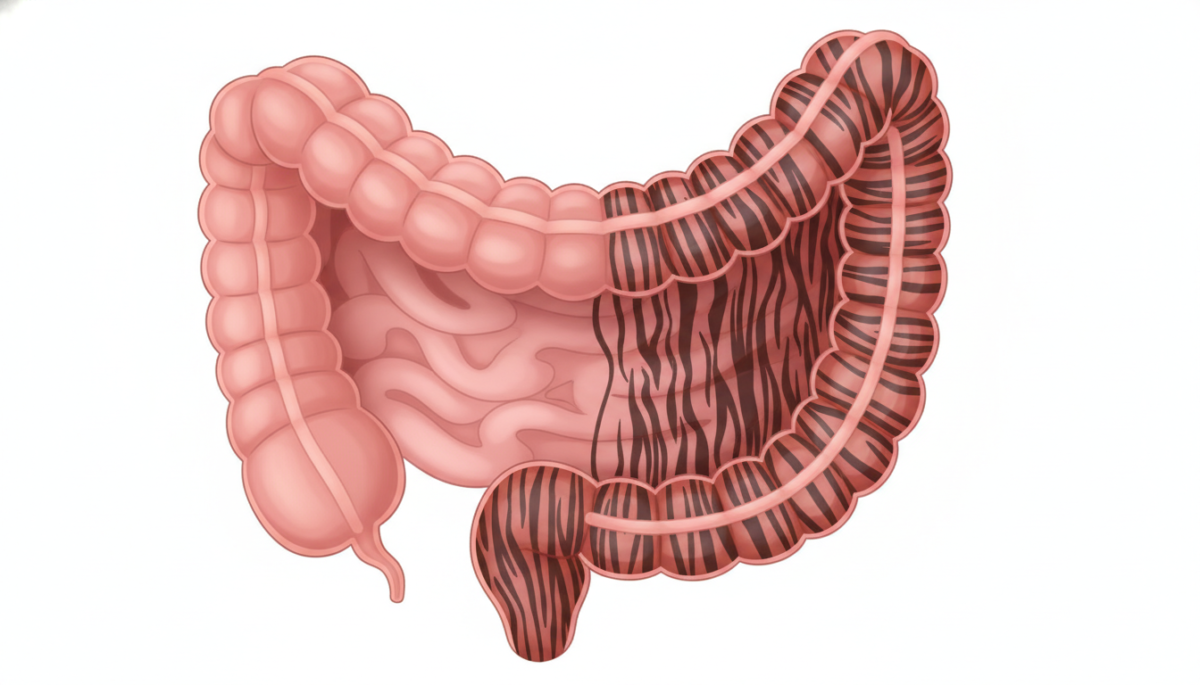

Imagine waking up from a routine colonoscopy only to have your doctor show you an image of your inner digestive tract looking unexpectedly dark, almost like a tiger’s stripes. This startling discovery often prompts the frantic question, “Doctor, why is my colon so dark?” In medical terms, this striking visual change is known as melanosis coli, a condition that sounds incredibly alarming but is actually highly misunderstood. If you have recently been told you have a dark colon, you are likely anxious about what this means for your long-term digestive health.
While the initial sight of a darkened intestinal lining can be terrifying, understanding the root cause of this condition can quickly put your mind at ease. Let us pull back the curtain on this mysterious condition, exploring why it happens, how it relates to your daily habits, and what steps you can take to restore your gut to its natural state.
What is Melanosis Coli and Why Does It Happen?
Despite its intimidating name, melanosis coli is not a disease or a precursor to cancer. Instead, it is a benign cosmetic alteration of the large intestine’s mucosal lining. When viewed through an endoscope during a screening, the normally pink, healthy tissue of your colon appears dark brown, deep bronze, or even pitch black.
This dramatic pigmentation occurs because of a cellular pigment called lipofuscin, which accumulates inside scavenger cells known as macrophages in the gut lining. When these immune cells engulf damaged cellular debris, they store this pigment, which gradually stains the colon wall over time. The result is a distinctive dark-mottled appearance that often resembles crocodile skin or a tiger-stripe pattern.
The Hidden Link Between Laxatives and a Dark Colon
To understand how your colon became dark, you have to look closely at your daily bowel habits and your medicine cabinet. The primary trigger for melanosis coli is the chronic, long-term use of specific herbal laxatives. Specifically, those containing anthranoid compounds, also known as anthraquinone glycosides, are the main culprits behind this staining.
Popular natural laxatives, such as those containing senna (sennosides), cascara, aloe, or rhubarb, work by irritating the lining of the colon to stimulate muscle contractions. While highly effective for occasional constipation, these active ingredients cause some of the epithelial cells in your gut lining to self-destruct. When these dying cells are cleared away by your body’s immune cells, they leave behind the dark pigment, leading to the characteristic staining of the colon wall.
Does Melanosis Coli Increase Your Risk of Colon Cancer?
It is completely natural to worry that a dark-colored colon is a warning sign of something more sinister, such as colorectal cancer. Fortunately, extensive clinical research offers deep reassurance on this front. Medical experts agree that melanosis coli is entirely benign and does not increase your risk of developing colon cancer.
Because the pigment accumulates only in the superficial layers of the colon wall, it does not damage the deeper tissues or cause dangerous cellular mutations. More importantly, this condition is completely reversible. Once you stop taking the offending anthraquinone laxatives, your body naturally clears out the accumulated pigment, and your colon lining will typically return to its healthy pink color within six to twelve months.
Practical Steps to Restore Your Digestive Health
If your doctor has identified melanosis coli during a screening, the first step is to review your current medication and supplement regimen. Working closely with a healthcare professional can help you safely transition away from stimulant laxatives without triggering severe rebound constipation. Over time, your digestive tract will heal itself once the constant irritation from stimulants is removed.
To keep your digestive system running smoothly without relying on harsh chemical stimulants, consider adopting these highly effective, sustainable lifestyle habits:
- Gradually Increase Dietary Fiber: Incorporate more whole grains, leafy greens, chia seeds, and fresh fruits into your daily meals to add natural bulk to your stool.
- Hydrate Constantly: Water is essential for softening stool; aim for at least eight glasses of water a day to help fiber do its job efficiently.
- Stay Physically Active: Regular moderate exercise, such as walking or cycling, naturally stimulates the muscles in your intestines and promotes regular bowel movements.
- Explore Safer Laxative Options: If lifestyle changes aren’t enough, ask your physician about osmotic laxatives or stool softeners, which do not cause pigment accumulation.
Discovering that your colon has darkened can feel like a major health scare, but it is ultimately a clear, helpful signal from your body. It is an invitation to re-evaluate how you manage constipation and to move away from temporary chemical fixes toward sustainable digestive wellness. By partnering with your doctor to build a natural bowel routine, you can give your digestive tract the gentle care it deserves, allowing your colon to naturally restore its healthy, vibrant state over time.
Frequently Asked Questions
既然大腸黑化症是良性的,為什麼照大腸鏡時醫生仍高度重視這個現象?
雖然大腸黑化症本身不致癌,但它是一個強烈的警訊,顯示患者長期過度依賴刺激性瀉藥。醫生能藉此發現患者潛在的嚴重便秘問題或濫用藥物習慣,並及時介入引導調整,避免腸道神經與肌肉因長期受刺激而受損。
所有類型的便秘藥或排便保健品都會導致大腸變黑嗎?
並非所有便秘藥都會導致大腸黑化。只有含有「蒽醌類化合物」的刺激性瀉藥才會引起,例如番瀉葉、蘆薈、大黃及美鼠李皮。其他如乳果糖、聚乙二醇等滲透性瀉藥,或膳食纖維補充劑,並不會導致腸道色素沉澱。
大腸黑化症除了讓腸道變色外,會不會影響大腸吸收水分或蠕動的功能?
大腸黑化症的色素沉澱本身局限於黏膜表層的巨噬細胞內,不直接損害深層肌肉或神經。然而,導致黑化症的「長期服用刺激性瀉藥」行為,確實會使腸道產生依賴性,進而削弱大腸自主蠕動的能力,加重便秘。
停止服用相關瀉藥後,大腸黑色素需要多久才能完全消退?期間需要治療嗎?
大腸黑化症是完全可逆的,通常不需要特殊藥物治療。只要停止服用含有蒽醌類的瀉藥,身體的免疫細胞會自然代謝並清除沉澱的色素。一般在停藥後的六到十二個月內,大腸黏膜就能恢復原本健康的粉紅色。
大腸變黑會不會影響大腸鏡檢查時醫生對息肉或早期癌症的判讀?
確實可能會有影響。因為大腸黑化症會使腸道黏膜呈現深褐色或黑白相間的斑紋,這種背景顏色的改變有時會干擾醫生對微小、扁平腺瘤或早期息肉的辨識。因此,檢查時需要更仔細地沖洗與評估,以免遺漏病灶。
Discover more from Nenext
Subscribe to get the latest posts sent to your email.