

YOU MAY ALSO LIKE


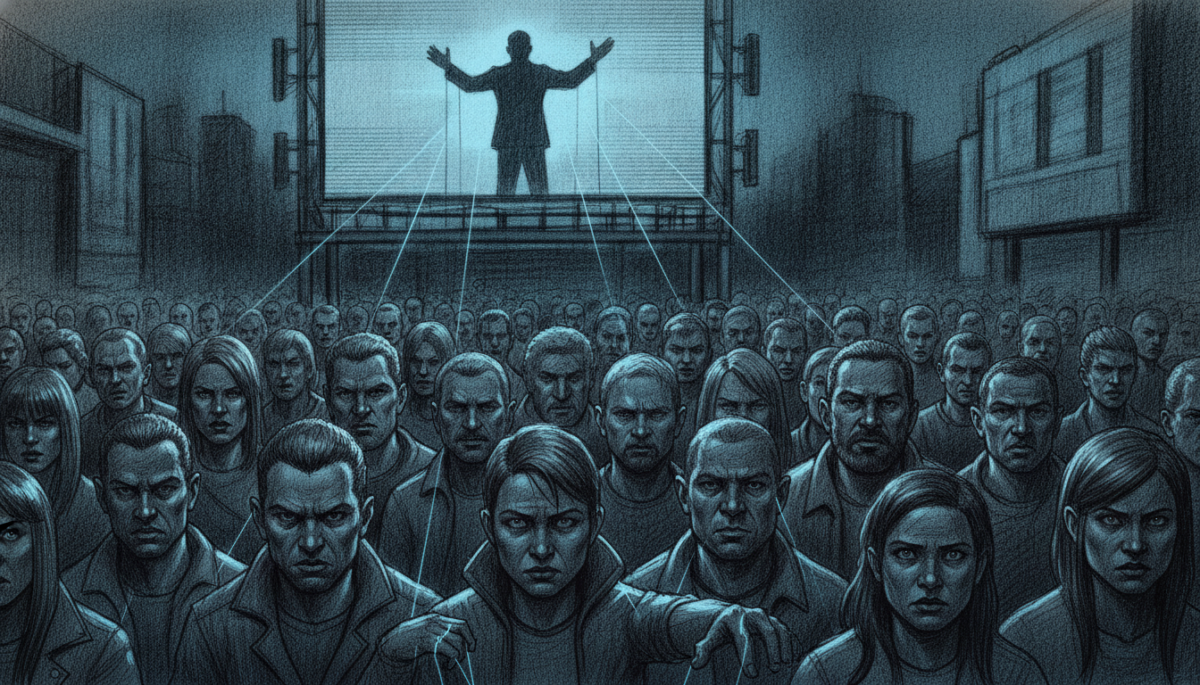
Imagine, if you will, a perfectly ordinary Tuesday morning. You’re sipping your coffee, scrolling through your phone, minding your own business, when suddenly a politician appears on your screen — eyes wide, voice trembling with the gravity of a man who just discovered the asteroid heading for Earth — and announces that they are coming. Who are “they”? Doesn’t matter. Your amygdala has already fired. Your coffee tastes different now. Congratulations: you’ve just been cognitively hijacked, and you didn’t even get a ransom note.
The Ancient Art of Scaring People Into Obedience
Fear, as any competent despot will tell you, is the oldest political technology on the planet. Long before social media algorithms and 24-hour news cycles, tribal leaders understood a fundamental truth about the human brain: a frightened person doesn’t think — they react. And a reacting person is infinitely easier to lead than a thinking one. Machiavelli wrote about it. Sun Tzu weaponized it. Your local city councilmember uses it to justify a parking ordinance. The scale changes; the playbook doesn’t.
What’s remarkable about our modern era isn’t that politicians exploit fear — that’s as surprising as discovering that water is wet — but the breathtaking sophistication with which they do it. Today’s cognitive hijacking is a finely tuned instrument, calibrated with polling data, focus groups, and the kind of behavioral psychology that would make Pavlov’s dog whimper in professional jealousy.
Your Brain: A Vulnerability, Not a Fortress
Here’s the part where we pretend to be surprised by neuroscience. The human brain, that magnificent three-pound organ we’re all so proud of, has a rather embarrassing design flaw: it prioritizes survival over truth. When the amygdala — your brain’s built-in smoke detector — detects a threat, it essentially shoves the prefrontal cortex (the part responsible for rational thought) into a closet and locks the door. This process takes roughly 12 milliseconds. Twelve. You can’t even blink that fast, but your brain has already decided to panic.
Politicians who understand this — and believe me, their strategists have read the research — know that the key isn’t to present a logical argument. The key is to trigger the alarm. Once the amygdala is engaged, critical thinking becomes a luxury your nervous system can no longer afford. “Immigrants are poisoning the blood of our country.” “If we don’t act now, your children will have no future.” “The other side wants to destroy everything you hold dear.” Notice the pattern? Vague enough to be unfalsifiable, vivid enough to activate your fight-or-flight response. It’s not rhetoric; it’s neurological exploitation wearing a flag pin.
The Fear Factory: Manufacturing Crises on Demand
Let’s walk through the assembly line, shall we? Step one: identify an out-group. Any out-group will do — immigrants, elites, the media, people who put pineapple on pizza. Step two: attach an existential threat to that group. Not a mild inconvenience, mind you, but a civilization-ending catastrophe. Step three: repeat the message across every available channel until it becomes background radiation in the public consciousness. Step four — and this is the masterstroke — position yourself as the only solution.
“Only I can fix it,” said a man at a podium once, and millions of amygdalae nodded in unison.
The beauty of manufactured fear is its self-reinforcing nature. Once people are afraid, they seek out information that confirms the threat, which makes them more afraid, which makes them seek out more confirming information. Psychologists call this a “feedback loop.” Political operatives call it “Tuesday.”
The Audience Participation Problem
Here’s the uncomfortable truth that no one wants to hear at the dinner party: we are not innocent bystanders in this process. We are willing participants. We like being afraid — or rather, our brains are addicted to the neurochemical cocktail that fear produces. Cortisol and adrenaline are powerful drugs, and outrage is their delivery system. Every angry share, every breathless retweet, every “Can you BELIEVE what they said?!” conversation is another hit. We are not being dragged into the fear factory. We are buying season passes.
Media platforms, of course, have built their entire business model on this addiction. An algorithm doesn’t care about truth or democracy; it cares about engagement. And nothing engages like fear. A calm, nuanced policy discussion gets twelve views. A screaming headline about imminent doom gets twelve million. The math is not complicated.
The Quiet Rebellion of Thinking Slowly
So what does resistance look like? It looks boring. Devastatingly, unglamorously boring. It looks like pausing before sharing. It looks like asking, “Is this true, or does it just feel true?” It looks like recognizing that the tightness in your chest after reading a headline is not evidence — it’s a physiological response being monetized.
The next time a politician stands at a podium, voice quaking with rehearsed urgency, telling you that the world is ending unless you vote, donate, or hate on command — take a breath. A real one. Feel your prefrontal cortex climb out of that closet, dust itself off, and ask the one question every cognitive hijacker fears most: “Wait — is that actually true?”
Somewhere, in the silence that follows, your amygdala will loosen its grip. And for twelve precious milliseconds, you’ll be free.
Frequently Asked Questions
What exactly is cognitive hijacking in a political context?
Cognitive hijacking occurs when politicians deliberately trigger your amygdala — the brain's threat-detection center — to bypass rational thought. By using vivid, emotionally charged language about vague existential threats, they short-circuit your prefrontal cortex before you can think critically. The goal is to make you react emotionally rather than evaluate their claims logically, making you easier to influence and lead.
Why does the brain prioritize fear over rational thinking?
The brain evolved to prioritize survival over truth. When the amygdala detects a perceived threat, it overrides the prefrontal cortex — responsible for rational analysis — in roughly 12 milliseconds. This was useful for escaping predators, but in modern politics it becomes a vulnerability. Politicians exploit this design flaw because a frightened person reacts instinctively rather than evaluating whether the threat is real or fabricated.
How do politicians manufacture crises that feel real even when they aren't?
They follow a repeatable formula: identify an out-group, attach an existential threat to that group, saturate every media channel with the message until it feels omnipresent, then position themselves as the sole solution. The language is kept deliberately vague enough to be unfalsifiable but vivid enough to trigger fight-or-flight responses. Repetition across platforms creates a sense of constant danger that feels authentic.
What is the feedback loop that makes fear-based messaging so effective?
Once people feel afraid, they instinctively seek information confirming the threat, which deepens their fear, which drives them to seek even more alarming information. This self-reinforcing cycle means politicians only need to ignite the initial spark — the audience then sustains and amplifies the fear on their own through selective media consumption and social reinforcement, making the manufactured crisis feel increasingly real.
Are we partly responsible for being manipulated by fear-based politics?
Yes. The article argues we are willing participants, not innocent bystanders. Our brains are drawn to the neurochemical cocktail fear produces, including cortisol and adrenaline. We gravitate toward alarming content, share it, and engage with it more than calm, nuanced information. This biological predisposition makes us complicit in the cycle, as our attention and engagement reward the very politicians exploiting these tactics.
Can understanding these tactics actually help someone resist cognitive hijacking?
Awareness is a meaningful first step but not a complete defense. Knowing that a message is designed to trigger your amygdala in 12 milliseconds gives you a framework to pause and engage your prefrontal cortex deliberately. Practices like delaying emotional reactions, questioning vague threat language, checking sources, and recognizing the manufactured crisis formula can help restore critical thinking before fear takes full control.
Discover more from Nenext
Subscribe to get the latest posts sent to your email.