


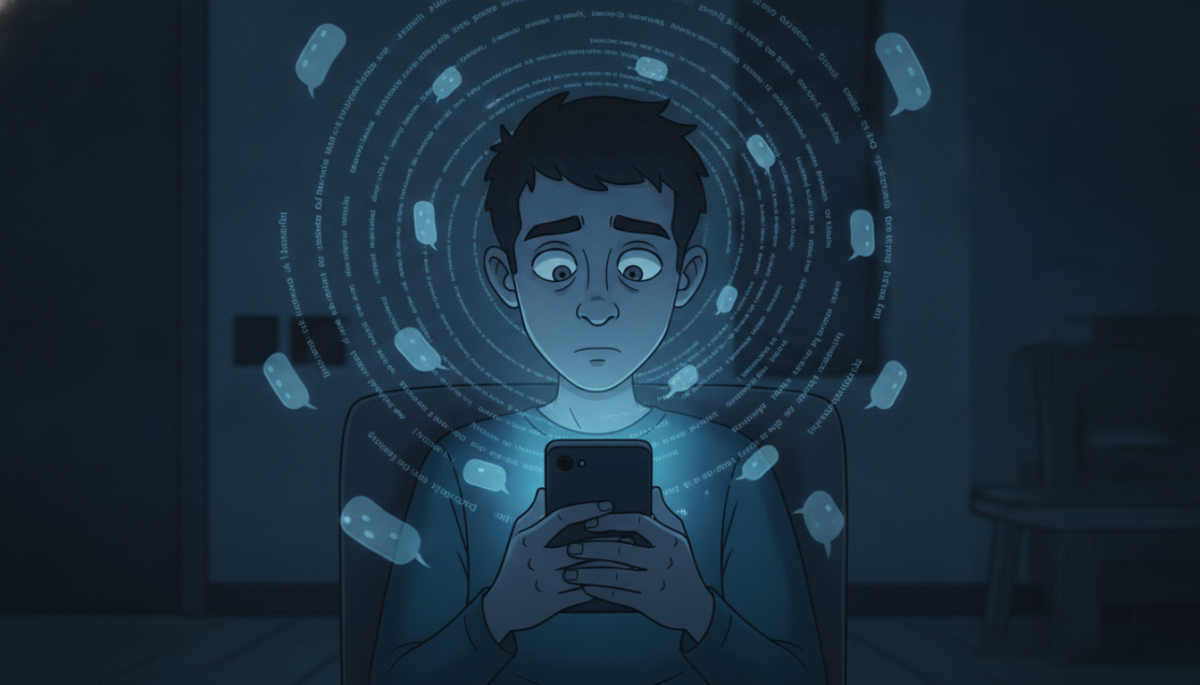


Arthur did not particularly like celery. In fact, he despised it. To Arthur, celery was nothing more than stringy, fibrous water that tasted faintly of dirt and disappointment. Yet, there he stood in his pristine, minimalist kitchen at seven in the morning, forcing a glass of murky green sludge down his throat. Why? Because according to a headline he had scrolled past six times in the last forty-eight hours, celery juice was the ultimate cure for “existential brain fog.”
He didn’t believe it the first time he saw it. “Nonsense,” he had muttered, swiping past a smiling influencer holding a blender. The second time, he scoffed. The third time, he paused. By the fifth time, a subtle shift occurred in Arthur’s gray matter. The claim was no longer a ridiculous internet rumor; it had transitioned into a “widely discussed wellness trend.” By the sixth time, it was simply a fact of life. His brain, exhausted from the daily labor of existing in the digital age, took a shortcut. Familiarity, it decided, was close enough to truth.
The Magic of the Second Glance
Welcome to the exquisite comedy of the human mind, specifically a psychological glitch known as the Illusory Truth Effect. It is the phenomenon where we rate statements as more likely to be true simply because we have heard them before. It does not require logic, evidence, or a glowing endorsement from a Nobel laureate. All it requires is a pulse and a relentless, soul-crushing amount of repetition.
We like to think of ourselves as intellectual fortresses, guarded by critical thinking and skepticism. In reality, our brains are more like overworked, underpaid interns looking for any excuse to cut corners. When we encounter new information, our brains have to work hard to process it. This causes “cognitive strain.” But when we see something we’ve seen before, the brain glides through it with “cognitive ease.” And because our brains are inherently lazy, they mistake this smooth, effortless processing for the sweet ring of truth.
Your Brain: The Ultimate Lazy Employee
“If it sounds familiar, it must be right,” whispers the subconscious. It is a design flaw that modern propagandists, corporate marketers, and political strategists exploit with the precision of a surgeon. They know that they do not need to present a dazzling, intellectually bulletproof argument to win you over. They just need to outlast your attention span.
Consider the modern political landscape, a theater where the truth is not debated, but simply worn down by attrition. A candidate asserts a wildly inaccurate statistic. Fact-checkers scream into the void, publishing detailed, multi-page refutations. But the candidate repeats the statistic. Their supporters repeat it. The news reports on the controversy, repeating the statistic yet again. Eventually, the correction is forgotten, and only the rhythm of the lie remains. It becomes a part of the cultural wallpaper. You hear it at dinner parties; you see it in memes. You begin to believe it, not because you are foolish, but because you are tired.
The Symphony of the Echo Chamber
“We don’t need to convince them,” a hypothetical digital campaign manager might whisper to a client. “We just need to make sure they hear it ten times a day.” In the age of algorithms, this is terrifyingly easy. Your social media feed is not a window to the world; it is a highly curated hall of mirrors designed to reflect your own biases back at you, slightly distorted, over and over again. If you linger on a post for three seconds too long, the algorithm notes your curiosity and feeds you ten more variations of the same claim.
By day three, you are living in a reality where everyone agrees that celery juice cures sadness, or that a specific billionaire is secretly a lizard. The illusion is complete. The lie has been repeated so many times that it has acquired the weight and gravity of a monument. To question it now would not just be questioning a fact; it would be questioning your entire community, your feed, and your own sanity.
The Sweet, Sweet Taste of Conformity
Back in his kitchen, Arthur finished his green juice. He wiped his mouth, wincing at the bitter aftertaste of pulverized stalks. He did not feel energized. He felt slightly nauseous and deeply irritated. But as he sat at his desk and opened his laptop, a notification popped up on his screen. It was an article titled: Why Celery Juice is the Morning Ritual You Can’t Afford to Skip.
Arthur smiled a faint, comforted smile. He clicked the share button, adding his own caption: “Game changer. So true!” With a single click, Arthur became another repeating speaker in the grand, droning chorus, sending the lie back out into the digital ether to find its next victim. He sat back, bathed in the gentle, hypnotic blue light of his screen, blissfully unaware that the echo chamber had just claimed another citizen.
Frequently Asked Questions
How does the brain mistake repetition for truth according to the Illusory Truth Effect?
When we encounter new information, our brain experiences cognitive strain to process it. However, repeated information is processed with cognitive ease. Because the brain naturally seeks to conserve energy and cut corners, it mistakes this smooth, effortless mental processing for accuracy and truth, regardless of whether the information is actually factual.
Why are detailed fact-checks often ineffective at stopping the spread of misinformation?
Fact-checks often fail because they inadvertently repeat the false claim to refute it. As the lie is repeated by media, supporters, and even critics, it gains familiarity. Over time, people forget the complex correction but remember the familiar statistic or claim, allowing the illusion of truth to outlast the factual refutation.
How do social media algorithms amplify the Illusory Truth Effect?
Algorithms monitor your engagement, such as lingering on a post. To keep you online, they feed you multiple variations of that same claim. This creates an echo chamber where a single lie is repeated ten times a day, artificially manufacturing the familiarity your brain needs to accept it as a widely agreed-upon fact.
Does being highly intelligent or skeptical protect someone from the Illusory Truth Effect?
No, intellectual skepticism is not a complete defense. The Illusory Truth Effect is a subconscious cognitive shortcut, not a sign of low intelligence. Even critical thinkers can succumb when they are tired or overwhelmed by the sheer volume of digital information, as the brain naturally prioritizes cognitive ease over rigorous analysis.
Discover more from Nenext
Subscribe to get the latest posts sent to your email.