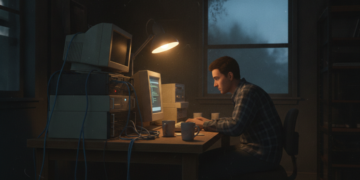


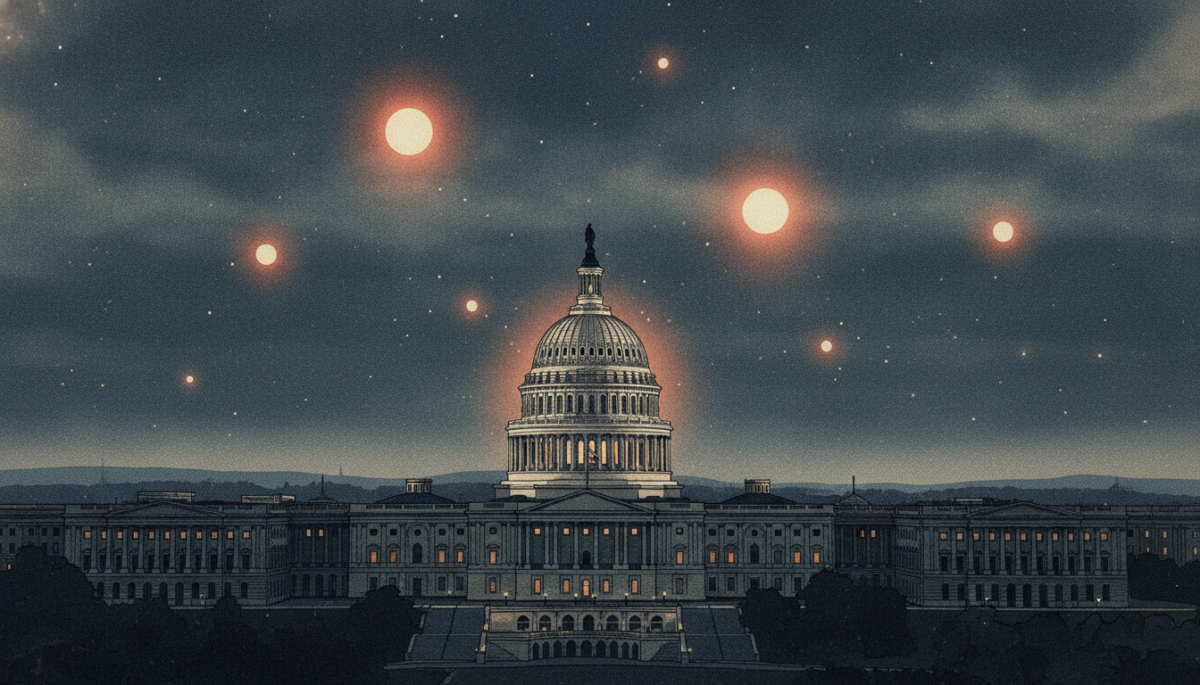


The air inside the radar room at Washington National Airport was thick with the hum of vacuum tubes and the stale scent of midnight coffee. It was 11:40 PM on Saturday, July 19, 1952. Senior air traffic controller Harry Barnes leaned over his radar scope, expecting another routine night shift monitoring the quiet skies of the nation’s capital. Instead, his screen flared to life with seven unexplained blips. They weren’t behaving like any aircraft Barnes had ever seen. They moved with erratic, terrifying speed, cluster-bombing the radar screen before instantly decelerating to a dead stop. Barnes rubbed his eyes, but the phantom targets remained. “Jim,” he whispered to his colleague, pointing a trembling finger at the glowing glass. “Look at this. They’re directly over the White House.”
The Night the Capital Stood Still
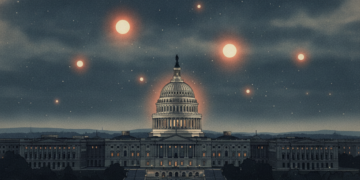
Within minutes, Barnes contacted the airport’s control tower. The controllers there gasped as they looked out the plate-glass windows into the humid summer night. Hovering in the distance, just above the glowing dome of the U.S. Capitol, were several bright, orange-white lights. They danced across the sky with a fluid, weightless grace, completely silent. Panic began to ripple through the military command structure. This was the height of the Cold War; the fear of a Soviet nuclear strike was a constant, suffocating weight. But these objects didn’t fly like Soviet MiGs. They defied the very laws of physics.
By 3:00 AM, the Air Force scrambled two F-94 Starfire jet interceptors from New Castle Air Force Base in Delaware. As the roaring jets tore into the airspace over Washington, Barnes watched his radar screen with bated breath. The moment the military jets roared into the vicinity, the mysterious lights vanished from the radar screens and the night sky simultaneously. It was as if they knew they were being hunted. But the moment the jets, low on fuel, turned back to base, the glowing intruders reappeared in the exact same positions. They were playing a calculated game of cat-and-mouse with the United States military.
The Second Wave and the Jet Chase
If the Pentagon hoped the incident was a one-time anomaly, they were gravely mistaken. Exactly one week later, on July 26, the cosmic visitors returned with a vengeance. Once again, radar screens at National Airport and Andrews Air Force Base lit up with glowing targets. This time, the Air Force was ready. Interceptor jets were scrambled immediately into the midnight sky.
Air Force Lieutenant William Patterson plunged his F-94 jet into the darkness, chasing a cluster of four glowing white lights. “I tried to contact them on my radio, but there was only static,” Patterson later reported. “I opened my throttle and closed in on them at maximum speed. Suddenly, they surrounded my plane. They were all around me, glowing white, and I didn’t know what to do.” Patterson asked the control tower if he should open fire, but before a decision could be made, the objects accelerated with a burst of blinding light, leaving the cutting-edge military jet standing still. They flew at speeds estimated to exceed 7,000 miles per hour—far beyond anything human technology could achieve in 1952.
The Pentagon’s Damage Control
By Monday morning, the nation was in a state of sheer hysteria. Headlines across the globe screamed of flying saucers invading Washington. President Harry S. Truman himself called the Air Force demanding answers. The public wanted to know: were we being invaded by the Soviets, or by something from another world?
To quell the rising tide of panic, the military organized what would become the largest Pentagon press conference since the end of World War II. On July 29, 1952, Major General John Samford, the Air Force Director of Intelligence, stood before a sea of sweaty reporters and flashing camera bulbs. He offered a reassuring, if highly controversial, explanation. The radar targets and visual sightings, Samford claimed, were nothing more than “temperature inversions”—a meteorological phenomenon where a layer of warm air traps cold air beneath it, causing radar beams to bend and reflect ground objects, while creating optical illusions in the night sky.
The Unresolved Mystery
While the temperature inversion theory succeeded in calming the public, it did little to satisfy the men who had actually been there. Radar operators like Harry Barnes vehemently rejected the explanation, noting that temperature inversions could not account for the sharp, synchronized movements of the targets on multiple radar stations. Pilots like Patterson knew what they had chased was solid, intelligent, and maneuverable.
The events of those hot July nights in 1952 remain one of the most significant UFO encounters in history. It demonstrated that even the most secure airspace in the world could be penetrated at will by forces unknown. Decades later, as the sun sets over the Potomac River and casts long shadows across the monuments of Washington D.C., one cannot help but look up at the darkening sky, wondering if those silent, glowing sentinels are still out there, watching from the edge of the cosmos.
Frequently Asked Questions
Why did the military suspect a Soviet attack during the Washington UFO sightings?
In July 1952, the Cold War was at its peak, and the fear of a Soviet nuclear strike was a constant concern for US officials. When unidentified, high-speed objects suddenly appeared over the White House and Capitol, military command initially feared they were highly advanced Soviet aircraft breaching restricted airspace, rather than extraterrestrial visitors.
How did the unidentified objects respond to the arrival of US military interceptors?
The objects seemed to actively monitor military communications or radar. During the first wave on July 19, they vanished the exact moment F-94 Starfire jets entered the airspace and reappeared as soon as the low-fuel jets departed. During the second wave, they actively surrounded Lieutenant Patterson's jet before vanishing at incredible speeds.
What flight capabilities did the UFOs display that defied the technology of 1952?
The objects displayed erratic flight patterns, cluster-bombing radar screens before stopping instantly. They flew completely silently over the Capitol and eventually accelerated to estimated speeds exceeding 7,000 miles per hour. This far surpassed the capabilities of any human aircraft at the time, including the cutting-edge F-94 Starfire jet.
How did the US government and President Truman react to the public panic?
The public hysteria prompted President Harry S. Truman to personally call the Air Force for answers. To manage the crisis, the military held the largest Pentagon press conference since World War II on July 29, 1952, where Major General John Samford attempted to calm the nation by attributing the events to temperature inversions.
Discover more from Nenext
Subscribe to get the latest posts sent to your email.