
- Option 1 (SEO-Driven): Preventing Elderly Falls: The Crucial Role of Vision Exams and Visual Training
- *Design Logic:* Targets high-volume search terms like “preventing elderly falls” and “visual training” to capture organic traffic from caregivers and health-conscious seniors.
- Option 2 (Benefit-Driven): Keep Your Loved Ones Safe: How Better Vision Prevents Dangerous Senior Falls
- *Design Logic:* Focuses on emotional resonance and actionable peace of mind, ideal for social sharing on platforms like Facebook or Pinterest.
- Option 3 (Intriguing/Click-worthy): The Invisible Fall Hazard: Why Perfect 20/20 Vision Might Still Put Seniors at Risk
- *Design Logic:* Uses a curiosity gap to hook readers on Reddit or Medium, challenging the common misconception that good visual acuity equals perfect safety.
Imagine keeping your home perfectly clutter-free, installing robust grab bars, and encouraging daily leg exercises, only for your elderly loved one to still suffer a sudden, dangerous slip. While many families focus entirely on physical strength and balance, the missing link in preventing elderly falls is often hidden right in front of their eyes. Vision impairment is a primary, yet frequently overlooked, catalyst for life-altering falls among seniors.
When a senior experiences vision loss, their ability to perceive depth, judge distances, and spot hazards drops dramatically. This comprehensive guide explores the deep connection between ocular health and mobility, offering actionable steps to protect your family.
The Hidden Link Between Vision Loss and Elderly Falls
Understanding how specific eye conditions impact daily mobility is the first step in creating a safer environment. Different visual impairments affect a senior’s spatial awareness in distinct, hazardous ways.
Glaucoma and Peripheral Vision Loss
Glaucoma gradually constricts a person’s visual field, often referred to as tunnel vision. Seniors suffering from glaucoma may fail to notice low-lying obstacles, pets, or changes in flooring level right next to them, significantly increasing trip hazards.
Macular Degeneration and Central Vision Blur
Age-related macular degeneration (AMD) distorts central vision, making it incredibly difficult to see fine details directly ahead. This blurriness prevents seniors from recognizing small objects on the floor, reading warning signs, or identifying uneven pavement.
Cataracts and Sensitivity to Glare
Cataracts cloud the eye’s natural lens, causing blurry vision and extreme sensitivity to bright light. In poorly lit hallways or under harsh, glaring lights, seniors with cataracts struggle to navigate safely, especially during nighttime hours.
Post-Stroke Visual Impairment
A stroke can disrupt how the brain processes visual information, leading to conditions like hemianopia (blindness in half the visual field) or double vision. Even if the eyes themselves are healthy, this neurological disconnect severely compromises balance.
Binocular Vision Dysfunction (BVD)
Even if a senior has excellent vision in each eye individually, they may suffer from Binocular Vision Dysfunction. If the eyes do not align and work together seamlessly, depth perception is ruined, making everyday tasks like stepping off a curb highly dangerous.
Pro Tip: Even minor changes in visual health can drastically impact a senior’s equilibrium. Do not wait for severe vision loss before seeking professional help.
Why a Comprehensive Eye Exam is Your First Line of Defense
A simple reading chart test is not enough to keep seniors safe. Regular, comprehensive eye examinations are essential to detect silent conditions before they lead to physical trauma.
When scheduling an appointment, ensure the optometrist or ophthalmologist conducts these critical assessments:
- Visual Acuity Test: Measures sharpness at both near and far distances.
- Tonometry: Measures eye pressure to screen for early signs of glaucoma.
- Dilated Eye Exam: Allows the specialist to examine the retina, macula, and optic nerve for damage.
- Visual Field Testing: Maps peripheral vision to identify blind spots.
- Binocular Vision Assessment: Evaluates eye coordination, focusing ability, and depth perception.
Be sure to inform the doctor if your loved one has a history of stumbling, experiences dizziness, or struggles with glare. This context helps customize their care plan.
Active Treatment and Corrective Measures for Aging Eyes
Once an eye condition is diagnosed, proactive management can dramatically restore confidence and physical stability.
For instance, cataract surgery is a highly effective procedure that replaces a cloudy lens with a clear artificial one, instantly restoring brightness and reducing glare. Similarly, managing glaucoma with prescribed eye drops or laser therapy can halt further peripheral vision loss.
Furthermore, ensure that your loved one’s prescription glasses are up to date. While progressive lenses are convenient, they can distort lower-field vision when walking down stairs. In some cases, having a dedicated pair of single-vision glasses for walking and outdoor activities is the safest choice.
Targeting Binocular Vision Dysfunction and Depth Perception
Binocular Vision Dysfunction (BVD) is a silent contributor to falls because it often evades standard eye exams. When the eyes struggle to align, the brain works overtime to correct the image, leading to dizziness, fatigue, and poor coordination.
To address this, specialized visual therapy can be incredibly beneficial. Vision therapists use targeted eye exercises, tracking tools, and specialized prism lenses to retrain the eyes to work in harmony.
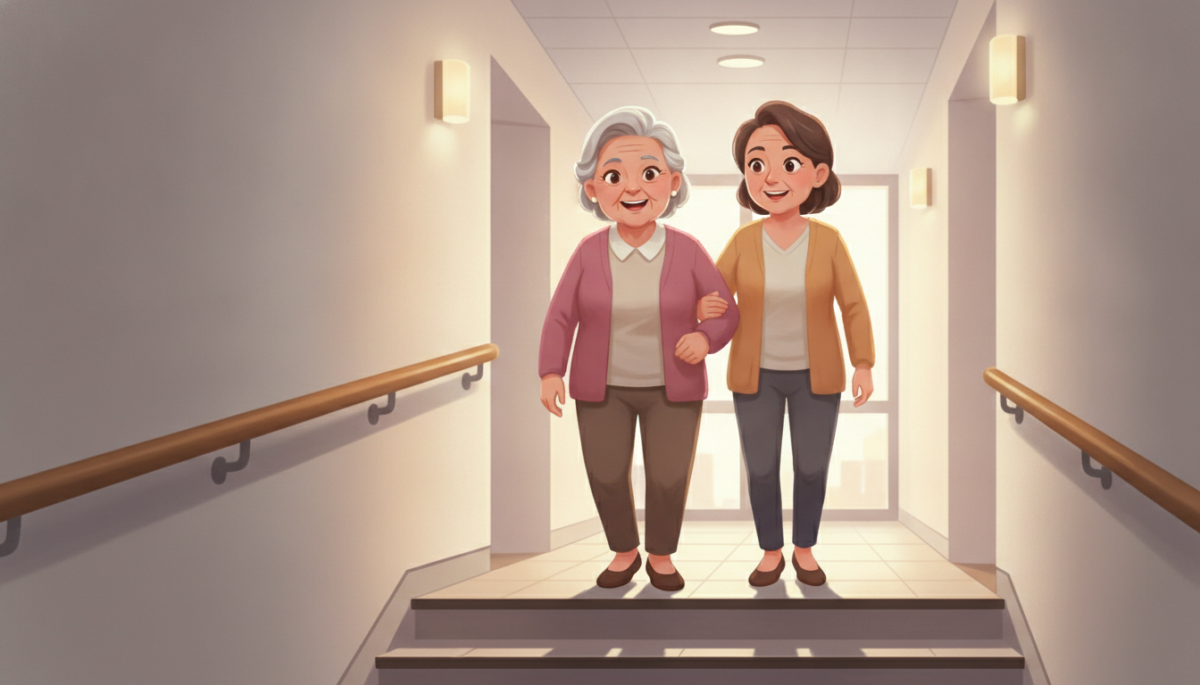
Consider the case of an 80-year-old grandmother who boasted 20/20 vision but frequently missed steps when walking downstairs. A binocular vision assessment revealed poor depth perception. After a few weeks of personalized visual training, her spatial coordination improved dramatically, and her daily stumbles virtually disappeared.
Designing a Vision-Friendly Home Environment
While addressing physical vision is vital, modifying the home to accommodate visual limitations is equally important. Simple, strategic adjustments can prevent accidents before they happen.
First, prioritize bright, even lighting throughout the home. Install motion-sensor nightlights in hallways, bathrooms, and stairwells to eliminate dark shadows. Avoid sudden transitions from bright rooms to dark corridors, as aging eyes take longer to adjust to light changes.
Second, introduce high-contrast colors to mark potential hazards. For example, place brightly colored non-slip tape on the edges of steps, and ensure the color of the furniture contrasts sharply with the flooring. Finally, keep walkways clear of loose rugs, extension cords, and low-profile clutter.
Integrating Strength and Balance Training for Maximum Safety
Vision and physical stability are deeply interconnected. To build a robust defense against falls, pair vision care with physical conditioning.
Encourage gentle leg-strengthening exercises, such as sit-to-stand movements or wall squats, to build lower-body power. Balance-focused activities like Tai Chi or structured walking routines can also enhance spatial awareness and reflexes. Always consult a physical therapist to design a safe, customized exercise program tailored to your loved one’s current physical capabilities.
Frequently Asked Questions
Why can binocular vision issues cause falls even if a senior has perfect vision in one eye?
If the eyes do not coordinate properly, the brain cannot accurately calculate depth and distance. This lack of depth perception causes seniors to misjudge the height of steps or curbs, leading to frequent trips and missteps despite having clear single-eye vision.
What tests should be included in a senior’s eye exam beyond basic vision charts?
A comprehensive exam should include tonometry for glaucoma screening, dilated retinal exams for macular health, visual field testing to map peripheral vision, and a dedicated binocular vision assessment to check how well the eyes work together.
Are progressive lenses safe for older adults prone to falling?
Progressive lenses can alter depth perception and blur the lower field of vision when looking down. For seniors prone to falls, using separate, single-vision glasses for walking and navigating stairs is often much safer than wearing progressives.
How does a stroke affect vision and fall risk if the eyes themselves are healthy?
A stroke damages the brain’s visual processing centers rather than the physical eyes. This can cause blind spots, double vision, or visual neglect, which severely impairs balance, coordination, and the ability to detect environmental obstacles.
Why is uniform lighting so important in preventing falls at home?
Uneven lighting creates dark shadows that seniors can easily mistake for physical steps or obstacles. Additionally, harsh glare can temporarily blind aging eyes, making uniform, diffused illumination essential for accurate spatial navigation.
Protecting our elders from the trauma of a fall requires a holistic approach that places visual health at the center of safety planning. By scheduling comprehensive eye exams, addressing binocular coordination, and optimizing home lighting, you provide your loved ones with the visual clarity they need to navigate the world with confidence. Start by assessing your home’s lighting today, and take that first proactive step toward securing a safer, more independent future for the seniors in your life.
Frequently Asked Questions
為什麼長輩即使視力檢查是 1.0(20/20),依然有因為視覺問題而跌倒的風險?
一般的視力檢查主要測量中心視力的清晰度。然而,長輩可能正遭受視野縮小(如青光眼)、雙眼視覺失調(BVD)或深度知覺受損等問題。這些隱形危害會影響空間感知,即使視力看似完美,依然容易在跨越門檻或下樓梯時失去平衡。
中風如何影響長輩的視覺功能,進而增加跌倒的機率?
中風會損害大腦處理視覺訊號的區域,導致偏盲(單側視野缺損)或複視(看見雙重影像)。即使長輩的眼睛結構完全健康,這種大腦與眼睛之間的訊號斷聯,也會嚴重破壞其身體平衡與空間定位能力,大幅提高碰撞與跌倒風險。
白內障引起的眩光敏感,在日常生活中會造成哪些具體的跌倒危機?
白內障會使眼球水晶體混濁,導致長輩對強光極度敏感。當他們從昏暗的房間走到陽光普照的陽台,或在夜間面對刺眼的日光燈時,強烈眩光會造成短暫失明或視覺模糊,使其無法看清地板的高低差或障礙物而絆倒。
什麼是雙眼視覺失調(BVD)?它如何影響長輩上下樓梯時的安全?
雙眼視覺失調是指兩隻眼睛無法精準同步對焦與協調。這會直接摧毀長輩的「深度知覺」,使他們無法準確判斷物體的遠近與高低。在上下樓梯或跨越路緣時,長輩會因為無法判斷階梯的實際深度而踩空跌倒。
為了有效預防跌倒,幫長輩預約眼科檢查時應該包含哪些非例行項目?
除了基本的視力表量測,應要求醫師進行眼壓檢查(篩檢青光眼)、散瞳眼底檢查,以及針對深度知覺、周邊視野和雙眼協調能力的評估。這能確保及早發現那些不影響中心視力、卻會嚴重破壞平衡感的潛在眼疾。
Discover more from Nenext
Subscribe to get the latest posts sent to your email.