



Lean closer, little one. The embers are dying, and the wind off the dry plains carries the scent of dust and oncoming rain. Do not look away from the sparks; they are the last bright things we have left in this fading world. I can feel the stiffness in my bones tonight, like the dry, cracked clay of the riverbeds before the spring flood. My breath is growing short, and when I go, the memory of our first father goes with me into the silence. Listen. Listen not just with your ears, but with your blood, for it is deep within your veins that this story still beats.
The Great Storm and the Salt Sea
Before our feet ever walked the mud, before the first seed was pressed into the dirt, there was only the chaos of the waters. Tiamat, the bitter salt mother, raged in the dark, her belly full of monsters and ancient, heavy night. Against her stood Marduk, the young storm god, his eyes flashing like lightning, his hands gripping the four winds. You have heard the singers in the ruins speak of his glory, but they sing for the conqueror. They sing to please the masters who hold the whip. They do not sing of the cost, nor of the one who dared to stand against the storm.
Tiamat fell, her body split like a dried fish to make the heavens and the earth. But the war was not over. There was Kingu, her champion, her consort, who wore the Tablets of Destiny upon his breast like a shield of stolen light. He commanded her eleven monsters, his voice roaring through the primeval mist, defying the young gods who sought to rule the cosmos with iron fists.
The Trial of the Rebel
Kingu did not bow. Even when Tiamat was torn apart and her monsters scattered like chaff in the gale, Kingu stood ground, his heart heavy with rebellion. But he was outnumbered. The younger gods dragged him before Marduk, his arms bound in chains of brass, his head forced down but his eyes burning with the cold, defiant fire of the abyss. The gods stood around him, shouting, demanding a sacrifice. They were weary, you see. They were tired of their labor, tired of digging the great canals to channel the rivers, tired of carrying the heavy baskets of earth, tired of keeping the world from falling back into the deep. They cried out for a servant, a beast of burden to bear the weight of the sky so they might rest in their golden halls.
The Red Clay of Creation
Marduk looked upon the bound rebel. He did not see just an enemy; he saw the raw material of a new world. ‘Let him be brought before us,’ Marduk commanded, his voice shaking the pillars of the sky and churning the dark waters. ‘He who stirred up the rebellion, let him bear the guilt, so that others may live.’ They slit Kingu’s throat. I want you to imagine that moment, child. Feel the cold, biting air of that ancient morning. The blood did not just spill; it hissed as it hit the primeval mud. It was not like our thin, watery blood. It was thick, dark, smelling of ozone, copper, and the oldest secrets of the stars.
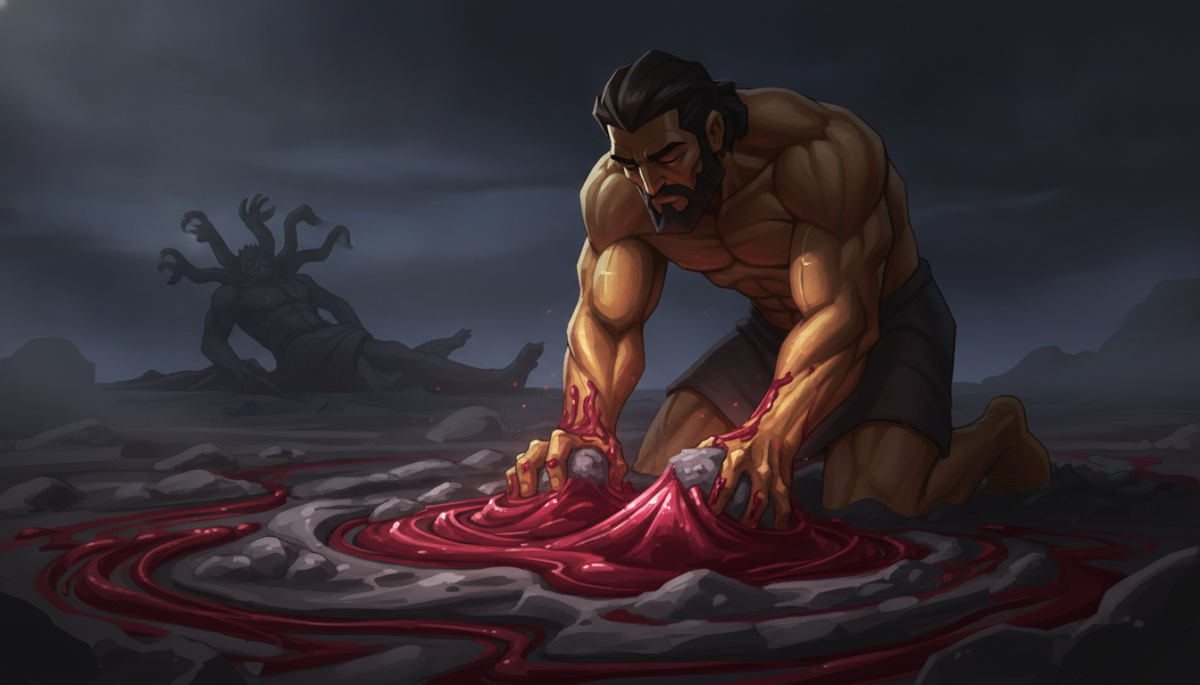
Marduk knelt in the mire. His great, golden hands, which had shattered Tiamat’s skull, now reached into the wet, cold earth. He scooped up the heavy clay, grey and lifeless. And then, he poured the warm, steaming blood of Kingu into the dirt. He kneaded it. Can you hear the sound? The wet, heavy squelch of clay and divine blood mixing under the hands of a god. He shaped the limbs, the torso, the hollow chest, and the heavy skull. Out of the blood of the rebel and the dust of the broken earth, he fashioned the first of us.
The First Breath and the Restless Inheritance
The clay was cold, but the blood within it still pulsed with the dying heat of Kingu. Marduk blew into the nostrils of the shape. Imagine that first breath, little one. It was not a gentle sigh. It was a sudden, sharp shock—a gasp that tore through the throat like a swallowed coal, filling the lungs with the harsh, cold air of a world that did not want us. The eyes flew open, staring up at the terrible, shining faces of the gods who had just slain their creator. The first man stood, his feet sinking into the mud, his hands already heavy with the destiny of toil.
We were made to serve. We were made so the gods could sleep. Every time you bend your back to dig the ditch, every time your hands bleed from carrying the stones for their temples, you are fulfilling the purpose of the clay. But never forget the other half of what you are. The clay binds us to the earth, but the blood—the blood of Kingu—runs in our veins. It is the blood of the one who refused to bow. It is why we weep, why we rage, and why, even in our chains, we dream of the sky.
The fire is almost out now, child. Only the grey ash remains, and the cold is creeping in from the desert. Lay your hand upon your chest. Feel that steady, quiet thumping. That is not just your heart. That is the ancient blood of Kingu, still beating, still remembering, still waiting in the dark.
Frequently Asked Questions
Why did Marduk decide to sacrifice Kingu specifically to create humanity?
Marduk chose Kingu not just as punishment, but because the gods were exhausted from their physical labor of maintaining the cosmos. By executing Kingu, the instigator of the rebellion, and using his divine blood, Marduk could create a resilient servant class—humanity—to inherit the heavy burden of physical toil, allowing the younger gods to rest in their golden halls.
What does the mixing of Kingu's blood with clay signify about human nature?
The fusion of Kingu's thick, ozone-scented blood with grey clay represents a dual inheritance. While the clay binds humans to the physical earth and a life of labor, Kingu's blood infuses humanity with the inherent spirit of rebellion, ancient cosmic secrets, and a defiant, restless energy inherited directly from the champion who refused to bow to the conquering gods.
How does the narrator's perspective on Marduk differ from traditional mythological songs?
Traditional singers in the ruins praise Marduk as a glorious conqueror to please current rulers. In contrast, the narrator views Marduk critically, portraying him not as a benevolent savior, but as an iron-fisted master who slaughtered his rivals and fashioned humanity out of a slain rebel's blood to serve as beasts of burden for weary deities.
What was the immediate physical sensation of the very first human breath?
The first breath was not a peaceful awakening, but a violent shock. Because the clay body was cold while Kingu's blood still pulsed with dying heat, the first breath felt like a sudden gasp that tore through the throat like a swallowed coal, forcing the newborn human to instantly confront a harsh, cold, and unwelcoming world.
Discover more from Nenext
Subscribe to get the latest posts sent to your email.